It is a ubiquitous custom in China that when an elderly person comes on the bus a younger person will stand up and give the elderly person his/her seat. On Sunday morning, March 3rd, white-haired, elderly-looking John got on Bus 16 for a 40 minute bus ride to attend church at the Hanlin Hotel; but, oddly enough, no one offered him a seat. Then a young lady who was standing told another young person who was seated to stand up and give John the seat. The person complied and when John gratefully took the seat he started up a conversation with the young lady who we now know is the incredible Lily. He introduced us as English teachers at Shandong University and offered to help her improve her English if she was willing to do so; which she was. That was the beginning of a great friendship.
She enjoyed the opportunity to practice her English with us and we enjoyed giving her "first" opportunities. Plus, Lily gave us incredible assistance with all manner of things during our second semester that we didn't have first semester, which really made our China experience more positive and memorable. Lily is an expert at bargaining in the night markets because she earned her way through college selling merchandise on the street/night markets.
We took Lily to Jennie's Cafe where she attempted to eat with a knife, fork & spoon for the first time. It wasn't easy for her…kind of like us manipulating chopsticks for the first time. We took Lily with us when we dined out at a Chinese restaurant and she helped us order delicious and interesting Chinese dishes that we would not have known to get without her.
Lily was with us once while we were tutoring three young elementary students in oral English, and she told us that she did not start school in her village until she was nine years old. While she couldn't attend one of the better high schools, she still applied herself to her studies and learned English quite well in record time.
The year before we met Lily, she graduated from a three-year technical university which was a few miles away from Shandong University and now she has a good job in Jinan. She rents an apartment located about a 20-minute bus ride from our apartment, with five other working gals. Her apartment is very old; older than the apartments that were built to accommodate China's Soviet-style heating system in which radiator-heat is turned on November 1st and turned off April 1st. So, there is no heat in her apartment during the winter. Neither was there any heat in her village home where she grew up. As of today, the only time Lily experienced heat during the winter was during the 3 years she lived in a dormitory while she attended the technical university.
To visit her family, Lily travels for five hours on an old, slow train for which she pays a standing-room-only ticket; and then takes a one-hour bus ride to her village. So it was with great delight that she took her first high-speed train ride with us. We took her with us on our trips to Qingdao, Mt. Tai, the Kong estate (Confucius), and Nanjing; which was the first time she experienced good American-style hotels and restaurants. And she enjoyed her first Chinese feast in a fancy Chinese restaurant with us. It was a lot of fun giving Lily interesting "first" experiences. Perhaps the best 'first' was when we rode the motorized boats at Daming Lake and let her drive the boat around the lake for an hour. This inspired her to study and take lessons to get her first driver's license. She went on her first tour with American tourists on the northern Silk Road which really helped her practice her English. All the Americans loved her like we do and she was such a helpful bargainer.
Our first trip to China was magnified because of the 'first' experiences we shared with the incredible Lily.

Thursday, January 2, 2014

Monday, December 23, 2013
December 24th in China
The night of December 24th is called peace night and everyone eats an apple.
Christmas Eve is just another working day in China, albeit thousands of Chinese Christians attempt to celebrate Christmas quietly. Last year the iconic Catholic cathedral next to the old campus of Shangdong University was closed for remolding and repairs. It will open its doors to the public this Christmas Eve and Christmas Day. Lots and lots of students are excited to go into the church which is usually gated and locked at all times. This is a rare treat that many students don't want to miss.


In China, tonight is called "Ping An"night. Ping in English
means safe and apple in Chinese is pronounce "Ping Guo." A beautifully wrapped a single apple is given to a friend to express best wishes.
I knew nothing about this tradition and suddenly on Christmas Eve, my students began bringing beautifully wrapped apples. It was curious to observe dozens of fruits stands set up along the boulevard selling gaily wrapped apples for just one day…gone the next day.
Christmas Eve is just another working day in China, albeit thousands of Chinese Christians attempt to celebrate Christmas quietly. Last year the iconic Catholic cathedral next to the old campus of Shangdong University was closed for remolding and repairs. It will open its doors to the public this Christmas Eve and Christmas Day. Lots and lots of students are excited to go into the church which is usually gated and locked at all times. This is a rare treat that many students don't want to miss.


Wednesday, December 18, 2013
Premium Admission?
Actually, the real story doesn't match the headline or the printed
summary. The real question might be, how differently does ICE treat
different nationalities in this "investment" immigration program; apparently, money doesn't guarantee automatic admission. Also, several
foreigners I have spoken to express the same sense of freedom they
experience in America. What we natives feel and take for granted is
quite different from what foreigners feel and yearn for.
http://www.bbc.co.uk/news/magazine-25374638
Chinese investors 'buying' US green cards for $1m
18 December 2013 Last updated at 00:05 GMT
As the US debates how to reform its immigration system - and deal with roughly 11 million undocumented immigrants living in the country - wealthy foreigners already have a legal route to a new life in America.
A visa programme called EB-5 offers overseas investors the opportunity to get permanent residence - a green card - in return for $1m (£614,000). In areas with high unemployment, the visas are available for a $500,000 investment.
The visas have been available since the 1990s, when Europeans were the main beneficiaries. But today Chinese citizens represent a majority of the applicants.
While critics complain about foreigners "buying" their way into the US, the scheme's supporters told the BBC that the developers fund projects that create jobs in America.
Produced by the BBC's Franz Strasser
Altered States is a series of video features published every Wednesday on the BBC News website which examine how shifting demographics and economic conditions affect America on a local level.
Monday, November 25, 2013
Chinese Names - the deep skinny
Some time ago I wrote a little bit about some of the quirky names my Chinese students chose for their English names, and a wee bit that I had learned about their Chinese names.
Daisy gave a more thorough presentation on Chinese names that shed deeper insight on this serious subject among Chinese. Chinese names generally consist of 2-3 characters (names): a surname which comes first rather than last like our Western names, followed by an Adjective name and then a Noun name.
It's often claimed that there are approximately 500 surnames in China. This belief seems to derive from a well-known book titled One Hundred Family Surnames, written by an unknown author during the Song Dynasty (960-1279). This book is widely used as a vocabulary text for students in old China, and it lists 507 surnames, of which 441 consist of one character and 66 of two characters. This list, however, is by no means exhaustive. At present, there are more than 5,000 Chinese surnames. They are derived from many sources, such as the names of ancient states or townships, official titles, given names, posthumous names, and specific localities, or trades.
The most common surnames in China, in descending order are Zhao, Qian, Sun, Li, Zhou, Wu, Shang, and Wang. In southern China, however, the most common names, in order of frequency are Chen, Li, Zhang, Huang He, Wu, Zhou, Hu, Ma, and Mai.
In old China, one's surname was revered because the individual bearing it was but a small link in the long history of an illustrious clan. One never changed a name, especially a surname. If a person did so, he/she had probably committed a grave or heinous crime and wanted to sever ties with the past through a name change. Such a person would most likely move away from home to start life anew.
People with the same surname shared a commonality and considered themselves relatives regardless of the number of generations removed geographical distance or lack of consanguinity. Since the commonality was derived from a common ancestor at some point in time, it was considered an insult when a person with the same surname disclaimed family or other close relationships. For the same reason, old Chinese customs prohibited marriages of couples with the same surname.
A Chinese person has many given names. One month after birth, an infant was given a 'milk name'. This name was used by family members, relatives and close friends. The name was usually selected either by the family elder or by a literate friend. Names for boys reflected the parents' wishes for his good health, longevity, prosperity, expected talent, virtues, diligence, filial piety, patriotism or intelligence. Girls were named after exotic flowers, pretty birds, musical instrument or jewels. Girls might also be named for feminine attributes such as beauty, grace, thrift and purity. In some families, however, girls were not given names but were simply referred to as the "oldest girl" or "second girl" or "third girl" and so forth.
Frequently, all the boys in one family would be given names that shared the same first character, or adjective. This was sometimes done with the girls in the family, as well. Since the two characters of the given name go together, they should be spelled together as a single word or occasionally hyphenated when the name is anglicized.
Another method for selecting a given name was based on the child's horoscope and its relationship to the "Five Elements." A fortune teller, after studying the month, day and hour of the birth, determined whether the infant had a full complement of the Five Elements of metal, wood, water, fire and earth. If any elements were lacking in the child, a character with the radical or root of the missing element was used in the name to correct the deficiency and make the child "complete."
Wednesday, November 20, 2013
Translation-English Class
May I introduce you to the smartest, sweetest, happiest, hardest-working, kindest, dynamic class of university students at Shandong University. I am so very proud of them. They are all required to speak multiple languages along with a killer schedule of classes. They are so studious and hungry to learn and put their learning into practice.


Sunday, November 17, 2013
The Making of Gutter Oil
Sometimes people ask me why I didn't eat street food. This is one
good reason.
Watching this short video reminded me of so many things I saw in China. For instance, a food vendor puts the food in a smallish plastic bag propped up in a bowl. The purchaser then carries the bag to wherever he/she will eat and usually has a bowl there waiting to lay the plastic bag in; and then he/she eats the contents of the plastic bag. I saw Chinese folks carrying plastic bags of stir fried food everywhere at lunchtime in Jinan.
I was always amazed to see small makeshift street "cafes" pop up on the sidewalk at dusk, complete with 10" folding X-stools for chairs and tiny tables.
The authorities may dismantle those hole-in-the-wall gutter oil factories, but the operators quickly find another spot and jump right back into business. There are so many millions of back allies ripe hole-in-the-wall operations of many kinds.
Monday, November 11, 2013
Giant Chinese, World-shaping Infrastructure Projects
Even the most casual visitor to China will be impressed by the massiveness the architecture and the public plazas. A billion-plus people need a lot of room for their entertainment, infrastructure and business. Equally impressive is the speed at which these construction wonders have arisen. The human toll and gargantuan land grabs are equally huge.
There is an old Chinese saying: IF YOU WANT TO BE RICH, YOU MUST FIRST BUILD ROADS. In the past year China has built the world's longest sea bridge, the world's longest gas pipeline and a super high-speed railway line connecting all the major cities in China's eastern corridor. Even now the $10.7 billion Hong Kong-Zhuhai-Macau Bridge will connect two huge regions when it is completed in 2016.
$44 BILLION: China is one of the 32 countries who sighned an agreement for the construction of connecting highways to span the continent and even reach Europe. ROAD TRIP!

$102 MILLION: The Pingtang telescope will be the world's largest radio telescope when completed in 2016.

$176 MILLION: Shanghai Synchrotron Radiation Laboratory conducts China's major scientific projects and is the country's most expensive research facility.

$200 MILLION: The Guangzhou Opera House is one of the three largest theaters in China, designed by architect Zaha Hadid.

$368 MILLION: The Hainan power grid project is China's first underwater cross sea power grid and will link the southern island of Hainan to mainland China.
Hainan Island is touted as China's Hawaii. Our visit to the southern shore of Hainan Island in the dead of winter was memorably pleasant, albeit far short of our Hawaiian visits.

$473 MILLION: The Qinling Tunnel is the longest highway tunnel in China.

$717 MILLION: The Kashgar-Hotan Railway connects all the cities and towns of the southwester Tarim Basin.
This reminds me of many buildings which were so sleek and impressive on the outside, yet a walk into the past on the inside.

$760 MILLION: China Central TV Headquarters is a loop of six horizontal and vertical sections covering 1,551,837 ft.

$900 MILLION: The Tianhuangping hydroelectric project is the biggest in Asia and plays a vital role in providing power supply in eastern China.

$1.1 BILLION: The Shanghai World Financial Center Project is home to the second highest hotel in the world - the Park Hyatt Shanghai is on the 79th floor.

$1.3 BILLION: The Baltic Pearl Project is China's largest foreign development project and consists of residential and commercial properties out St. Petersburg, Russia.

$1.7 BILLION: The Nanjing Metro Line was completed in 2005 and is used by more than 180 million people a year.

$1.8 BILLION: The Shanghai Yangtze River Tunnel and Bridge is the fifth longest cable-stayed bridge in the world.

$1.9 BILLION: The Chengdu Shuangliu Airport handles 35 million passengers annually.

$2.12 BILLION: The Wuhan Railway Station serves the world's fastest trains at 217 mph.

$2.2 BILLION: At 128 stories, The Shanghai Tower will be the tallest skyscraper in China and the second tallest in the when completed in 2014.

$2.2 BILLION: The Qinshan Nuclear Power Phase II will add to the Qinshan plant and have the most nuclear reactors of any site in the world.

$2.88 BILLION: The Hongyanhe Nuclear Power Plant is the first nuclear power station in northeastern China and will reach 45 billion kWh annually.

$3 BILLION: The Great Gabon Belinga iron ore mine is China's largest African mining operation.

$3.3 BILLION: The Tianjin offshore drilling rig is China's national base for offshore oil development.

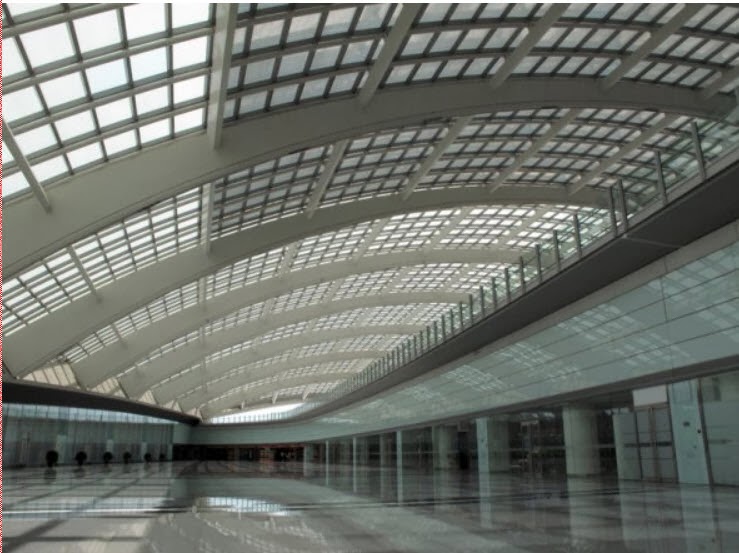
$3.5 BILLION: The Beijing Capital International Airport Terminal is the largest single construction project in China and the third largest building in the world.
$4.5 BILLION: Lingang New City is a planned city proposed to be completed on this distant land in 2020, to house almost 1 million people.

$6.3 BILLION: The Xiangjiaba Hydro power Project is expected to be completed by 2015 and will generate 31 billion kWh annually.

$5 BILLION: The Shanghai-Hangzhou maglev project will create the fastest inter-city train in the world at 280 mph.

$6.3 BILLION: The Beijing South Railway Station is Asia's largest railway station.
Obviously photoshopped blue sky. Living is Beijing is akin to a two-cigarette-pack smoking habit per day. Jinan is 2 1/2 packs a day.

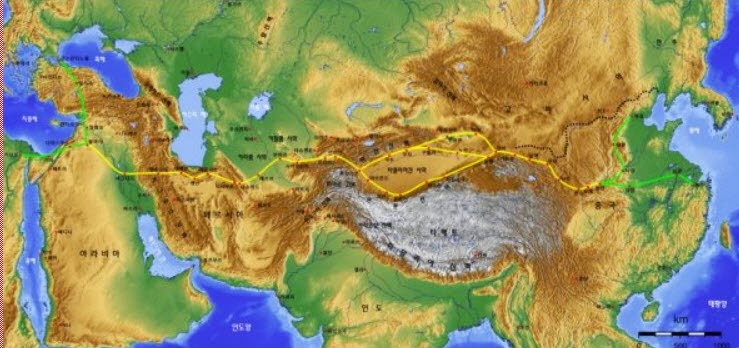
$6.5 BILLION: China is one out of several countries that signed a contract to reconstruct the ancient SILK ROAD linking China and India with Europe.
$6.76 BILLION: Xiluodu Dam will be the third tallest dam in the world and second largest hydro-power station in the country.

$7.89 BILLION: The Su-Tong Yangtze Bridge is the world's longest cable-stayed bridge.

$8 BILLION: The Shanghai Yangshan Deep Water Port Project will hand the largest container ships in the world.

$8.3 BILLION: The Nigerian Railway Modernization Project is China's largest overseas project.

$10.2 BILLION: The Yangjiang Nuclear Power Station in Guangdong province will be the biggest nuclear power plant in China.

$10.2 BILLION: The Guangdong Yangjiang Nuclear Power Station will be China's newest power plant when completed this year.

$12 BILLION: The Hainan Wenchang Space Center launch project will be the country's newest launch center.

$14 BILLION: The Harbin-Dalian High-Speed Railway will serve the first high speed train in northeast China.
We visited the spectacular snow & ice festival in Harbin in January when it was 40-degrees below zero. High-speed trains running in that weather is impressive, indeed.

$16 BILLION: Hangzhou Bay Bridge is the world's longest cross-sea bridge project.

$18.2 BILLION: The Jiuquan Wind Farm will be the largest wind power base in the world when completed this year. Wind is plentiful in the Gobi Desert.

$23.1 BILLION: The Kunming New International Airport is China's 4th largest aviation hub. Those ribbons of dancing concrete are awe-inspiring to behold. I tried in vain to capture their massive beauty with my camera.

$33 BILLION: The Beijing Shanghai High Speed Railway is the wold's longest high-speed rail project.

$45.4 BILLION: The Ningzia Ningdong Energy and Chemical Industrial Base will double the provence's GDP and generate $30.3 billion after the planned 2020 completion.

$62 BILLION: The South-to-North Water Diversion Project is expected to divert 44.8 billion cubic meters of water to the North by 2050. That assumes the rivers won't run dry like unto our mighty Colorado River. High in the northwest mountains snowmelt is affecting water resources and we were told that the Chinese government is building five reservoirs in five mountains to capture and control the water.

$458 BILLION: The Tianjin Harbor Industrial Zone is one of the largest chemical ports in the world.

Other great Chinese infrastructures worth mentioning:
$2.6 BILLION: China's construction of the Libyan coastal railway project.
$4.5 BILLION: Guangzhou Nansha Lair shipbuilding base project.
$5 BILLION: Niger oil project
$5.4 BILLION: Changzing Shipbuilding Base, world's largest shipbuilding base
$7 BILLION: Algerian East-West Highway Project
$10.7 BILLION: Baosteel million-ton steel base project in Zhanjiang East Island.
$11.7 BILLION: Rural Market Project
$20 BILLION: Portland Oilfield Sinopec investment
$26.8 BILLION: Tianjin ethylene project
$38 BILLION: Zhangzhou and Fuzhou-Xiamen railway projects
$77.5 BILLION: Super market projects
$77.5 BILLION: Liaoning Hongyanhe Nuclear Power Project
$237 BILLION: State Environmental Protection 11th 5-year Plan ...surrrre.
$800 BILLION: Zhejiang Sanmen Nuclear Power Project
$900 BILLION: Northern Energy and Chemical Base Project
ONE TRILLION: Tianjin Binhai New Area Investment
....a new world coming


Subscribe to:
Posts (Atom)